

[ad_1]
Every sales call holds useful insight. In 2026, the difference between teams that hit quota and those that don’t usually comes down to visibility, not effort. If you don’t record sales calls, you lose buyer signals, objections, and intent from customer interactions the moment the conversation ends.
Sales leaders don’t record calls only for storage. They use them to build a searchable library of actual conversations, improve go-to-market execution, enable real-time coaching, and close more deals faster.
Learn how to record sales calls, apply best practices, and use the right features to turn conversations into revenue.

What Is Sales Call Recording?
Sales call recording preserves video or audio recordings from customer conversations between sales representatives and prospects. Teams once used basic call recording for compliance and dispute resolution.
Now, teams use it for call analysis, post-call analysis, and improving rep performance across the sales cycle. Recording creates accurate records that teams can review, share, and use to improve deal strategies and call outcomes.
5 Ways To Record Sales Calls
Cloud phone systems offer call-recording features that let you choose suitable ways for different use cases. Take a deep dive to understand more about when to use them.
| Recording method | Best use case | Why it works | Outcome |
|---|---|---|---|
| Automatic recording | High-volume SDR/BDR teams | Documents every interaction without gaps | Calls log automatically and support pipeline tracking |
| On-Demand recording | Sensitive or high-stakes conversations | Gives control over what gets recorded | Teams track only key moments like pricing or objections |
| Supervisor recording | Coaching and onboarding | Helps managers review real conversations | Enables structured feedback and performance improvement |
| Conference recording | Team discussions and internal meetings | Keeps shared records across stakeholders | Teams stay aligned on decisions and next steps |
| Video recording | Product demos and walkthroughs | Includes both conversation and visual context | Helps analyze buyer engagement during demos |
1. Automatic call recording
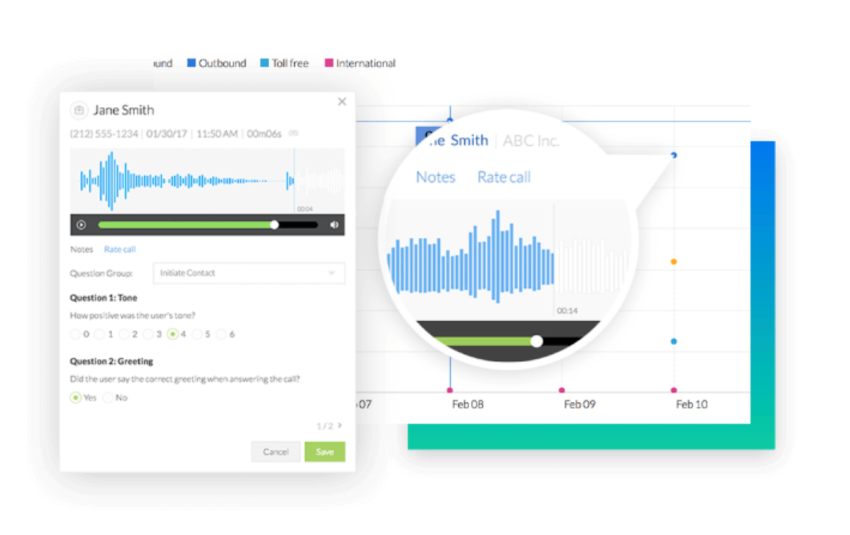
The automatic call recording feature lets sales team members record all calls without manual intervention. These can be cold calls, follow-ups, demos, or critical business conversations.
When you record every call automatically, sales reps can:
- Replay and hear important details shared on the call.
- Capture context from conversations where the prospect’s accent is unclear.
- Avoid asking prospects to repeat the same information in subsequent calls.
These recordings later become helpful training materials for onboarding new reps and improving customer success through quality assurance. They assist in legal compliance for financial services, healthcare, and telecommunications businesses.
What makes these recordings automatic? You can toggle on the option within your cloud phone system. No beeps, wires, or cassette tapes. Simply log in, and you can listen to calls anytime.
2. On-demand call recording
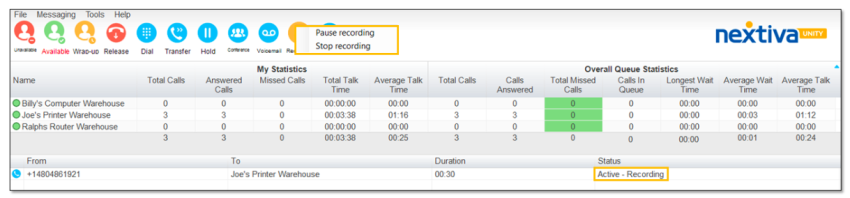
Salespeople can start and stop recording specific parts of the conversation.
You can respect your customers’ privacy and comply with legal requirements tied to key discussions. When it’s switched on, both parties will hear a message such as “Recording in progress.”
Phone systems allow you to customize these messages as per your choice. An easy option is to mention in your call flows that calls may be recorded for quality and training purposes.
Salespeople are better equipped to capture valuable call data instead of recording everything. This reduces noise and helps teams focus on important coaching moments. When you come back for replays, it’s less clutter. You can jump into the core right away rather than sliding through conversations to find what you need.
3. Supervisor-initiated recording
Sales leaders use supervisor-initiated recording to monitor sales calls remotely and provide feedback.
Often, these recordings don’t announce whether a call is being recorded, avoiding any customer speculation. For this reason, professionals sometimes call it selective silent recording.
Here are some situations where supervisor-initiated recordings help:
- Monitoring a team’s performance and helping them improve.
- Recognizing and appreciating salespeople who follow best practices on calls.
- Revisiting tricky discussions to address them through cross-functional support.
4. Conference call recording
Records multiple people’s voices on a conference call.
Large organizations use conference call recording to maintain records of different verticals’ priorities and updates. It’s like a stand-up meeting on a large scale, where department heads report.
Companies use it for various other reasons, including the following:
- Capturing details over group discussions or brainstorming sessions.
- Keeping a record of cross-departmental meetings.
- Providing access to the recording to all participants after the call so they’re on the same page.
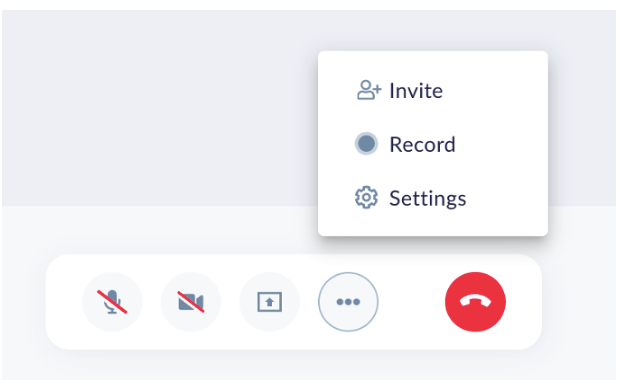
5. Video meeting recording
Salespeople use video meeting recording in industries where visual presentations or demos are key to successful sales. Software as a Service businesses rely on it to review potential customers’ sentiments after the call.
Businesses see their benefits in several areas:
- Optimizing their sales motion for particular use cases.
- Reviewing the actual pains of their potential customers and engaging them with relevant marketing collaterals.
- Collecting prospects’ feedback on what they expect from your product or service.
Related: How to Record Customer Service Calls & Why You Should
How To Record Sales Calls (Step-by-Step)
Follow these steps to build a dependable system that not only records calls but turns them into usable insights.
1. Choose a recording tool
Start with a platform that is suitable for your sales workflow. Look for tools that include key features like call recording, real-time transcription, and CRM integration. These features ensure your team can record conversations and act on them without extra work. They reduce manual data entry and help teams focus on selling instead of documentation.
Cloud-based platforms like Nextiva allow you to record calls directly over the internet, making setup faster and more scalable than traditional systems. Choose a system your team can use daily without friction. Before you decide, check:
- Recording options (automatic and on-demand)
- Storage limits and search functionality
- Integration with your CRM and sales tools
- Security and compliance features
2. Set up your system
Connect your phone system and configure recording settings. If you use VoIP, enable recording for inbound and outbound calls from your admin dashboard. Define rules based on your workflow. For example, record all calls for SDR teams but only specific calls for account executives. Set up:
- Default recording preferences
- Storage location (cloud or internal system)
- Access permissions for teams
Test the setup before rolling it out. Run internal calls and confirm that recordings save correctly and remain accessible.
3. Inform participants
Notify customers clearly before recording begins. Many regions require consent from one or all participants. Use automated messages at the start of calls to keep the process consistent and avoid delays.
Keep the message simple: “This call may be recorded for quality and training purposes.”
If automation isn’t available, train reps to ask for consent early without disrupting the conversation. Clear communication builds trust and keeps you compliant.
4. Start recording
Decide how your team will record calls based on the use case.
- Use automatic recording for high-volume teams
- Use on-demand recording for sensitive conversations
- Use supervisor recording for coaching scenarios
Avoid switching methods too often. Continuity helps you build a reliable dataset for analysis. Make sure recordings begin at the right moment. Missing the start of a call often means losing critical context.
5. Store and organize calls
Save recordings in a central, searchable system. Avoid scattered storage across devices or folders. Use a single platform where your team can access calls easily.
Tagging and categorization help teams find past conversations quickly instead of scrolling through hours of recordings. Organize recordings by sales reps, deal stage, customer or account name, call type (demo, follow-up, negotiation).
6. Review and analyze
Turn recordings into insights instead of just archives. Managers should review recordings regularly to understand what drives results. To focus on patterns instead of isolated moments, look for:
- Common objections
- Call outcomes
- Talk-to-listen ratios
- Key moments where deals move forward or stall
- Messaging that resonates with buyers and improves win rates
Use call transcripts to scan conversations faster and improve sales techniques across the team. Jump to important sections instead of replaying entire calls. Make call reviews part of your weekly workflow, not a one-time activity.
7. Sync with your CRM
Attach recordings directly to your deals and contacts. This step connects conversations to revenue. When recordings sit inside your CRM, teams can review context without switching tools.
Each call should link to:
- The correct lead or account
- Deal stage and activity timeline
- Notes and follow-ups
This creates a complete view of every interaction and helps teams make better decisions at every stage of the pipeline.
8. Apply Insights
Use what you learn to improve performance across the team and hit sales targets. Recording alone doesn’t drive results; action does. Use insights to:
- Refine sales scripts and messaging
- Coach reps with real examples
- Identify winning patterns across deals
- Improve objection handling
Share strong call examples across the team. Build a library of high-quality conversations that new hires can learn from. Over time, this creates a feedback loop where every call improves the next one.
A strong recording process connects recording, analysis, and action into one system. When teams follow these steps, they store conversations and turn them into a competitive advantage.
How AI Improves Sales Call Recording
In 2026, recording a sales call is only the starting point. Teams use AI to pull insights from conversations and act on them faster.
- Automated summaries and CRM updates: AI reviews conversations and creates short call summaries that highlight pain points, competitor mentions, and next steps. It then attaches these insights to the right deal in your CRM, so reps don’t spend time on manual notes.
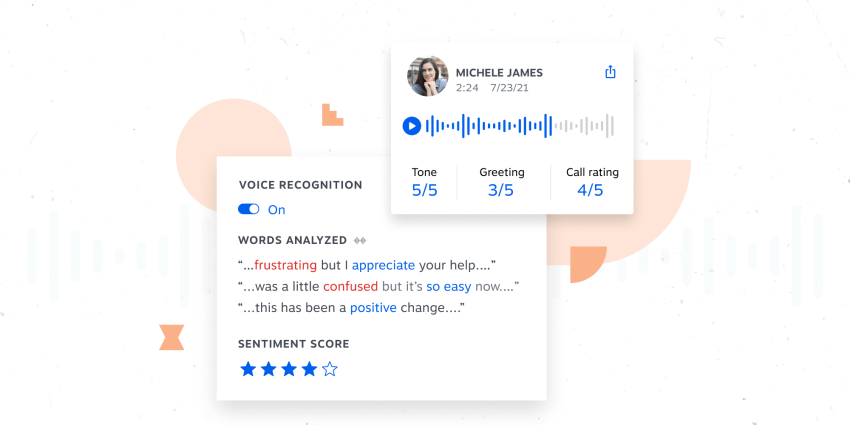
- Sentiment and intent analysis: AI evaluates tone and speech patterns to understand how prospects respond during the call. Teams can spot when interest drops, hesitation increases, or buying intent strengthens.
- Key moment detection: AI flags important parts of the conversation, such as pricing discussions or implementation questions. Teams can jump straight to these sections instead of reviewing the entire call.
- Real-time guidance: Some tools guide reps during live calls. They suggest responses, surface relevant information, and help reps handle objections without breaking the flow.
- Background transcription: Modern systems transcribe and analyze calls in the background without adding visible bots or interruptions. This keeps conversations natural while still tracking every detail.
Let’s compare traditional and AI call recording to understand the difference more clearly.
| Traditional recording | AI-driven recording |
|---|---|
| Manual call reviews | Automated performance insights |
| Rep-written notes | AI-generated summaries |
| Basic keyword search | Sentiment and theme analysis |
| Stored recordings | Searchable, actionable insights |
| Isolated data | CRM-connected insights |
Traditional recording helps you store conversations, while AI-driven recording helps you use them. With AI, you don’t spend hours searching for answers, and easily get clear signals on what works, what doesn’t, and where to improve. This shifts call recording from a passive activity to an active part of your sales strategy.
Best Practices To Record Sales Calls
Now that you know how to choose a call recording method, you need a few best practices to set it up for success. Below are a few practices you can follow while recording sales calls.
Stay in compliance
Go through local, state, and federal laws related to recorded conversations. Many laws mandate that you get consent from both parties before recording begins.
These laws vary from state to state. Some require the consent of one party, while others need it from all parties. Check what applies to your business.
Automate recording notifications
Your salespeople can verbally ask prospects and customers if they can record the call. However, it isn’t a part of the core conversation. Potential buyers trust you with their time. And you should quickly be able to share how you can help without going sideways.
VoIP systems can automatically notify customers at the beginning of the call so you can drive them into the core discussion right away.
State the purpose
It’s important to state and honor the purpose of recording. Tell the parties why you’re recording the conversation, and adhere to the promise.
Whether it’s for training, legal documentation, or quality assurance, add it to your recording notification, or state it verbally if you can’t append it.
Keep recordings safe
Protect customer data as your own. Safeguard call recording and transcriptions against security threats that affect confidentiality. You can adopt role-based access controls to make sure only authorized people or systems can access sales conversations.
Identity and access management software will let you configure these security measures, keeping recordings safe from internal or external threats.
Review recorded calls
Call recordings give conversation intelligence to your team that can push their sales performance metrics to the next level. You can see why a particular account turned into a deal or dropped off. This feedback lets you coach people and offer sales tips so they improve.
Regularly reviewing these recordings maintains a consistent flow of opportunities for your sales, marketing, and product teams and other business functions. Marketing gets a hint of what assets they can create, and product teams get actual customer feedback to ideate their future sprints.
Respect customers’ preferences
If a customer doesn’t want to be recorded, don’t record. But have a process to handle objections, so your normal workflows don’t create a hurdle that prevents customers from having the best possible experience.
Sales coaching helps your team navigate these situations, amplifying their overall performance.
Related: How To Record Business Calls and Why It Matters
Alternatives To Call Recording
There are several alternatives to phone call recording. Based on your use case, you can decide what would fit the given situation.
1) Live call monitoring
Supervisors can listen to inbound or outbound calls with call monitoring. Salespeople and customers may or may not be aware of it. Sales leaders use this feature for real-time quality assurance. It motivates sales reps to follow best sales practices.
If calls go sideways, you can provide real-time guidance to maintain call quality per the company’s standards.
Here are some notable benefits of live call monitoring:
- Improves customer communications: Managers listen to calls and provide immediate feedback, encouraging their teams to match set quality standards and motivating agents to perform at their best.
- Reduces periodic training costs: As employees learn on the job, training costs are reduced.
- Reveals issues in real time: Call monitoring uncovers issues preventing salespeople from effectively engaging their prospects. A sales manager can provide timely guidance or interventions if necessary, using Barge-in.
2) Barge-in
Barge-in functionality allows sales managers to join a call. They can speak to all parties involved in the discussion to assist in a complicated sale. When a call isn’t going as planned, you can correct it with an intervention.
Below are some of its notable benefits:
- Provides direct feedback: Get feedback on the quality of service and overall satisfaction with the salesperson’s assistance.
- Increases confidence with collaboration: Salespeople are reassured they’ll have help when they’re in need. Barge-in lets you collaborate with them as a leader, showing you care about the numbers but are willing to pitch in and navigate tricky situations with them.
- Speeds up the sales process: If salespeople need support from engineers about a particular customization, they can add them to the same call to offer suggestions. This reduces back and forth and speeds up the process.
3) Post-call surveys
In a post-call survey, customers receive a call from a company right after talking to their sales rep.
They pick up and hear, “Thanks for speaking with XYZ. How satisfied are you with the call on a scale of one to five? Five being highly satisfied.” They press a number on their phone and give feedback.
Some companies do these surveys on call, while others send a text message with a link to submit feedback.
A post-call survey offers many benefits for companies that implement it, including:
- Increases customers’ trust: It shows customers that their opinions are valued and considered.
- Aids in employee training: Feedback helps in improving training programs.
- Sets up quickly and easily: A post-call survey is typically easy to implement and execute.
4) Sales manager callbacks
These are follow-ups made by a sales manager to the customer after a sales interaction. You can perform them to understand the customer’s experience and resolve unaddressed issues or concerns.
Several benefits come with sales manager callbacks, including:
- Increases customer satisfaction: Buyers see you value their pain points and feedback when you set an extra layer of quality assurance and oversight.
- Demonstrates accountability: You show that your company takes responsibility for resolving issues if a salesperson can’t handle them effectively.
- Increases sales opportunities: Managers can identify and act on additional sales opportunities during these calls.
Challenges in Sales Recording
As teams scale call recording across regions and departments, new challenges emerge beyond setup and compliance.
Managing rep and prospect comfort
Visible recording tools or AI bots can affect how people behave during calls. Prospects may hesitate to speak openly, and reps may change their behavior if they feel monitored.
Solution: Use backend or botless recording methods that log calls without adding visible participants. Position recording is a support tool that removes manual note-taking, not as a monitoring system.
Handling data volume without losing focus
Recording every call creates a large amount of data, making it harder to find what is more important. Teams collect more recordings than they can realistically review.
Solution: Use AI to highlight key moments such as objections, pricing discussions, or competitor mentions. Focus on patterns instead of individual calls.
Maintaining audio and data quality
Poor audio leads to inaccurate transcripts and unreliable insights. Background noise, weak connections, and low-quality hardware reduce transcription accuracy and limit analysis.
Solution: Use high-quality VoIP systems like Nextiva and standardize high-quality headsets and setups across your team. Clear audio improves both human review and AI analysis.
Cloud-based contact centers bring the scalability and flexibility of the cloud to sales organizations, allowing you to make, record, log, and analyze phone calls at scale. Here’s a quick overview to get you up to speed on cloud contact centers.

Increases efficiency
VoIP phone systems let you record calls and save them for easy access when needed. You can avoid the hassle of running after notes or finding the conversation snippets you sent out to your manager.
It gives you the context you want at the time you choose. But, of course, only if you have permission to access the recordings.
Here’s how it increases efficiency:
- Adapts quickly: Expanding teams deal with fluctuating call volumes. VoIP systems can easily scale up and down based on their needs without any heavy lifting to build physical infrastructure.
- Improves training: It helps you train sales reps with real examples, letting them ramp up quickly and get up to speed in their roles.
- Makes decision-making data-driven: There is less chance of reiterations on your sales process when you set it up with what best works for customers.
- Connects easily with existing business systems: VoIP phone systems such as Nextiva offer integrations to connect with your existing CRMs and other systems.
Delivers better customer experiences
VoIP systems let you pair call recording with other alternatives and complements such as live call monitoring or post-call surveys. This improves customers’ experience as you can provide real-time assistance and implement customer feedback as it comes in.
These factors play a pivotal role in enhancing customer experience:
- Optimize sales tactics: You can tailor sales strategies based on customer feedback to better address their needs.
- Resolve issues faster: VoIP call recording gives you context around the issue, allowing support teams to pitch in and resolve it.
- Keep communication quality consistent: Call recordings help managers coach their entire team. It allows everyone to handle situations in the same way.
Reduces expenses and increases security
With a VoIP phone system recording calls, you don’t invest significantly to set up a physical infrastructure. It reduces your upfront expense of adopting traditional systems.
Moreover, VoIP security strictly enforces call encryption and other measures to ensure business communications are safe and secure against threats.
Here are a few other benefits that make a strong case for VoIP phone systems:
- Updates automatically: VoIP solution providers take care of updates and patch the system to protect against vulnerabilities.
- Reduces maintenance expenditure: The maintenance costs decrease since you don’t add new lines as you scale.
- Maintains reliability and data security: VoIP phone systems such as Nextiva offer a 99.999% uptime, keeping your phones operational 24/7/365. These solution providers perform rigorous penetration testing to locate vulnerabilities and adopt fraud mitigation strategies.
Offers global reach
Cloud-based VoIP services give companies a global reach. You can make calls over the internet to anyone, anywhere, without high costs. Likewise, customers abroad can call you at their local rates, making your business more accessible on a global level.
Here are a few reasons to consider VoIP if you operate internationally:
- Reduces calling expenses: With VoIP, international calls happen over the internet, and you can save the recordings easily. It doesn’t require you to pay international dialing charges.
- Opens up a global market: Calling or recording shouldn’t restrict you to the local market. Leverage VoIP features to make international calls and attract customers globally.
Recording Made Simple With Nextiva
Sales call recording tools act as a complete recording solution that delivers the knowledge nuggets you need to close more deals. While dialing prospects on your phone or hosting a video demo, use call recordings to refine the sales workflows with valuable insights.

Nextiva’s cloud call center records such sales calls. It makes analysis a breeze and streamlines sales performance management. Taking a route through the cloud is cheaper, more secure, and, most importantly, more adaptable to your team’s needs.
It comes with enterprise-grade reliability and security, paired with ample flexibility to handle calls from NextivaONE.
Related: How Call Center Recording Software Is Changing
Sales teams scale faster with Nextiva.
Streamline sales workflows. See how Nextiva helps your team hit quotas.
Frequently Asked Questions (FAQs) About Sales Call Recording
Sales call recording software records audio and video interactions between sales reps and prospects. Teams once used it as a digital filing system, mainly for compliance and dispute resolution. Today, it forms the base of conversational intelligence (CI). Modern tools do more than store calls. They analyze conversations to detect buyer intent, competitor mentions, and sentiment, and turn raw discussions into structured, searchable data.
A sales call recording system processes and analyzes conversations in real time using cloud-based telephony. It records calls through VoIP or traditional systems, separates speakers to keep conversations clear, converts audio into text, and analyzes interactions for key insights. It then automatically attaches recordings and summaries to the correct lead or deal in your CRM, so teams can review conversations and take action without manual effort.
Sales teams record calls to review what actually happens in conversations. This gives leaders clear visibility into how reps handle objections, position value, and move deals forward. It also helps teams spot patterns across wins and losses, improve messaging, and keep communication consistent.
Recording calls also supports compliance, protects against disputes, and creates a reliable source of truth. Instead of relying on memory or notes, teams can review real interactions and make decisions based on facts.
Call recording supports key areas of the sales process. It helps managers coach and train reps using real conversations, improves deals by identifying what works and what doesn’t, keeps messaging consistent across teams, reveals buyer insights like objections and needs, tracks performance through conversation patterns, and creates a dependable record for compliance and documentation.
Recording sales calls is legal if you follow local consent laws. Some regions require one-party consent (only one person), while others require all participants to agree before recording. To stay compliant, inform participants at the start of the call, state the purpose, and store recordings securely.
Call recording stores audio files. Conversation intelligence analyzes those calls to identify patterns, buyer intent, and key moments.
Laws depend on where you and your customers are located. Key regulations include:
GDPR (EU): Requires consent and secure data handling
CCPA (California): Grants data access and deletion rights
PIPEDA (Canada): Requires meaningful consent
U.S. consent laws: Some states require all-party consent
Industry standards: HIPAA (healthcare), PCI DSS (payments)
Always verify local laws before recording, especially for international calls.
[ad_2]
Source link